
Natural neck pain relief starts with a plan, not a random list of tips. Whether you slept at an odd angle, spent six hours on a video call, or carried stress in your shoulders for weeks, the result is the same: you’re stiff, uncomfortable, and looking for something that actually works.
What follows is a prioritized routine you can start today, ordered by immediacy and impact. Most mild to moderate neck pain responds well to consistent at-home care. Apply this sequence and you’ll likely be in that group. If your pain keeps returning despite doing everything right, there may be a structural root cause that stretches and ice packs can’t fully address. We’ll cover that too.
Use Heat and Cold Therapy in the Right Order
Cold comes first for fresh pain. If your neck pain started within the last 48 to 72 hours, wrap an ice pack in a cloth and apply it for 15 to 20 minutes. Wait 30 to 40 minutes, then repeat. Cold reduces localized inflammation and numbs acute discomfort quickly. Don’t skip the cloth barrier, direct ice contact on skin can cause tissue damage rather than relief, a point consistent with standard first-aid guidelines.
After the first 48 to 72 hours, switch to heat. A heating pad or warm shower, used for 15 to 20 minutes, relaxes muscle tension and improves blood flow to tight tissue. Heat also works as a prep step before stretching: warm the neck first, then move it. This sequence matters because stretching cold, stiff tissue produces less benefit and carries a higher injury risk.
For chronic or recurring neck stiffness, contrast therapy can help. Alternate between cold and heat in a single session: 10 to 15 minutes of ice, a 30-minute rest, then 15 to 20 minutes of heat. Cold reduces inflammation while heat promotes circulation, and cycling between the two addresses both at once. It’s worth noting that the research here is mechanistic rather than neck-specific, large randomized trials focused on the cervical spine are limited, but most people notice meaningful improvement with this approach in practice, and it’s a reasonable option to try and observe. Stop if your symptoms worsen. For additional guidance on when to use ice versus heat, see ice or heat for neck pain.
Neck Stretches and Exercises That Actually Relieve Stiffness
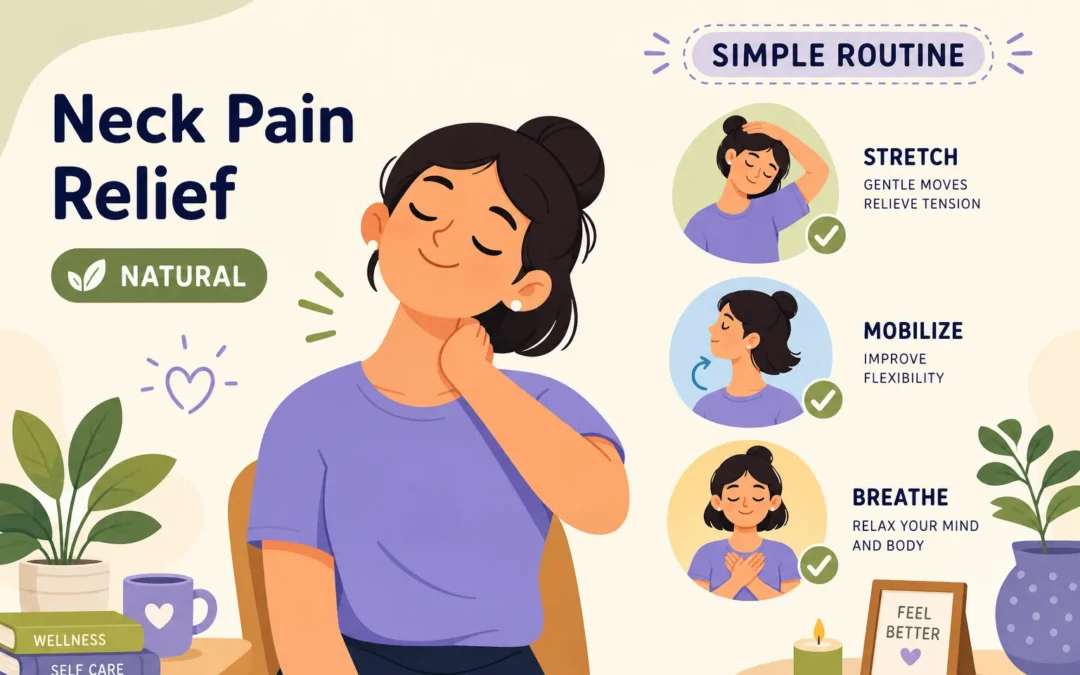
Three movements do most of the work for neck stiffness relief. Daily practice with these beats occasional deep sessions every time. The clinical literature also supports therapeutic exercise as an effective component of neck pain management; for more detail see evidence supporting exercise for neck pain.
Chin Tuck
Start with the chin tuck, one of the most effective movements for desk-related neck pain, widely recommended in physical therapy for forward head posture. Sit tall, draw your chin straight back (not down), hold for five seconds, and repeat ten times. This elongates the back of the neck and directly counters the postural driver behind most screen-related cervical pain.
Lateral Neck Tilt
Follow that with the lateral neck tilt. Slowly tilt one ear toward the shoulder, hold for 20 to 30 seconds, then switch sides. This targets the lateral muscles that carry the majority of daily tension and is one of the more accessible neck pain home remedies you can do at your desk.
Levator Scapulae Release
The third stretch is the levator scapulae release: turn your head toward one armpit, gently guide it forward with your hand, and hold for 20 seconds. The upper shoulder-neck junction is where chronic tightness tends to collect, and this stretch goes directly there. For additional neck stretching options and progressions, review resources on stretching for back and neck pain.
Add shoulder rolls and resistance presses to build on the stretching work. Ten to fifteen backward shoulder rolls reduce upper back tension that feeds directly into neck stiffness. For more on related shoulder issues and how they contribute to neck problems, see Shoulder Pain. Resistance presses build the deep stabilizing strength that protects you between sessions. To perform one, press your palm against your forehead for five seconds while your neck pushes back. Repeat on each side. Consistency matters more than intensity with all of these movements. For athletes or those focused on performance and injury prevention, additional strategies can be found in our Athletic Injury & Sport Performance resources.
Ergonomic Neck Pain Solutions That Stop Pain From Coming Back
Your monitor setup is probably working against you. The top of your screen should sit at eye level, roughly an arm’s length away. Looking down even slightly for hours places significant compressive load on the cervical vertebrae. Studies of office workers have found that correcting monitor height alone can reduce reported neck discomfort by 20 to 30 percent within a few weeks, one of the most impactful changes you can make for ongoing neck pain prevention. For a practical guide to monitor placement, see an ergonomic monitor height guide.
Chair position is equally important. Your elbows should sit at 90 degrees, your feet flat on the floor, and your lower back supported. When you slouch forward, your head shifts out in front of your spine and the muscles of your neck and upper back work overtime just to hold it up. Laptop users need to raise the screen and use an external keyboard and mouse; a laptop flat on a desk forces the head down and shoulders forward, which undoes everything else you’re doing right.
Beyond the setup, daily movement habits determine whether your ergonomic changes actually hold. Move every 30 minutes: a short walk, a round of chin tucks, or a shoulder roll sequence breaks up accumulated tension before it becomes pain. The 20-20-20 rule also helps: every 20 minutes, look at something 20 feet away for 20 seconds. This reduces eye strain that often triggers compensatory neck tension. Keep your phone at chest height or higher during extended use.
When At-Home Care Isn’t Enough
Clinical guidelines generally recommend seeking professional evaluation if neck pain shows no meaningful improvement after about one week of consistent self-care, sooner if red-flag symptoms are present. Recurring pain that returns after a few good days is a particularly clear indicator that something more than muscle soreness is involved. It often points to a length-tension imbalance where chronically shortened muscles on one side pull the cervical spine out of alignment. Stretching the symptomatic area provides temporary relief, but it doesn’t change the underlying pattern.
Pain accompanied by headaches, shoulder tension, or limited rotation is worth taking seriously. These combinations suggest a postural or neuromuscular pattern rather than simple muscle soreness. Red flags that require prompt professional evaluation include radiating pain into the arms or hands, numbness or tingling, significant weakness, pain following a car accident or fall, and any combination of neck stiffness, fever, and severe headache. If any of these are present, skip home care and see a provider, a primary care physician, physical therapist, or chiropractor, right away.
For pain that may be structural in origin, neurosomatic therapy is one approach worth exploring. At Complete Bodywork in Orem, Utah, each session begins with a full postural assessment that maps imbalances across the entire neuromuscular system, not just the painful area. That assessment identifies which muscles are overloaded, shortened, or underactivated, and treatment works to address the compensation chain driving the problem. Neurosomatic therapy aims to produce durable change by addressing structural origins rather than managing symptoms, a meaningful distinction for anyone who has cycled through home care and conventional treatment without lasting results.
The Short Version of This Natural Neck Pain Relief Routine
Use cold for the first 48 to 72 hours, then switch to heat. Perform chin tucks, lateral tilts, and levator scapulae stretches daily. Fix your monitor height and chair position, then maintain it. Move every 30 minutes. Most people with mild to moderate neck pain see noticeable improvement within one to three weeks when they apply these at-home neck pain treatments consistently.
If your pain keeps returning despite following this routine, or if it hasn’t improved after a week of consistent effort, the problem may be structural. That’s when a postural assessment becomes worth exploring. Complete Bodywork offers a free initial consultation to gather your full history and build a plan around the actual cause. If you’re in Utah County and ready to stop cycling through temporary fixes, that’s a logical next step toward lasting natural neck pain relief, Contact.