
Most people with sciatica have already tried something. A stretch they found online, a few sessions with a chiropractor, maybe a round of physical therapy. And it helped, for a while, before the pain quietly returned. That pattern is not a coincidence, and it is not a sign that your body is beyond help.
If you are asking what is the best therapy for sciatica without surgery, the honest answer is that it depends on what is actually driving your nerve irritation. Many conservative treatments focus primarily on symptom relief, calming the nerve rather than correcting the structural issue irritating it. That distinction matters more than most people realize. Effective non-surgical care for sciatica starts with correctly identifying what is compressing or tensioning your sciatic nerve in your specific body, not applying a protocol borrowed from a generic clinical handbook. Clinical guidelines from organizations like the American Academy of Orthopaedic Surgeons support individualized, exercise-based conservative care as the foundation of treatment.
Here is what the evidence actually shows, and how to build a plan that goes beyond temporary relief.
Why Sciatica Keeps Coming Back After Most Treatments
Sciatica is not a diagnosis. It is a symptom. The sciatic nerve is being compressed or irritated somewhere along its path, and the cause varies significantly between individuals. For some, it is a herniated lumbar disc pressing on a nerve root, the most common source of lumbar radiculopathy. For others, it is a tight piriformis muscle squeezing the nerve in the buttock, a condition sometimes called piriformis syndrome. Postural factors and muscle imbalances can also contribute, particularly in extraspinal cases, though the primary driver is often disc-related or related to spinal stenosis.
The gap between pain relief and structural correction is where many treatments fall short. Reducing inflammation quiets the nerve. Decompressing it temporarily takes pressure off. But if the muscular dysfunction or postural imbalance contributing to that compression is never addressed, the nerve gets irritated again. Symptoms return, often within weeks. This cycle is not a failure of willpower or tolerance. It is the predictable result of treating the symptom without resolving the cause.
What Is the Best Therapy for Sciatica Without Surgery? What the Evidence Shows
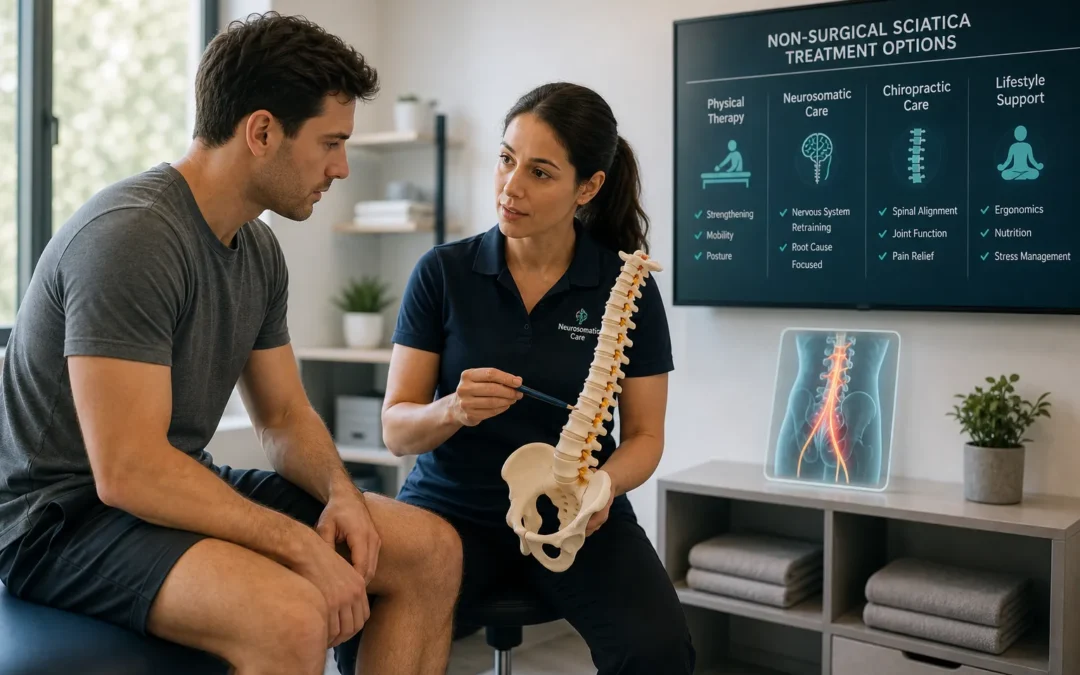
Physical therapy is the first-line recommendation from clinical guidelines for a reason. Meta-analyses of randomized controlled trials confirm that supervised exercise reduces pain and improves function for sciatica, particularly in acute cases. The McKenzie Method and structured exercise programs consistently outperform no treatment, and most mild-to-moderate cases show meaningful improvement within four to six weeks. One study comparing spinal manipulation to a sham group found that 100% of the physiotherapy group reported reduced radiating pain at medium-term follow-up. Those numbers are real.
Chiropractic care shows similar results. Spinal manipulation produces meaningful short-to-medium-term pain reduction and, in some subgroup data, high rates of radiating pain relief. The limitation worth noting for both modalities is scope. Practice varies widely among clinicians, many physical therapists do incorporate whole-body assessment and multimodal approaches, but the focus in standard protocols often targets the site of nerve compression rather than full-body contributors. Used early and consistently, both PT and chiropractic are genuinely valuable. Used as standalone long-term solutions without addressing underlying imbalances, they often become a revolving door.
Home Exercises and Injections: Where They Fit in Non-Surgical Sciatica Treatment
Specific home exercises have real evidence behind them. The piriformis stretch, knee-to-chest stretch, pelvic tilt, nerve glides, and cat-cow all help reduce muscular tension around the sciatic nerve and improve mobility. Performing them at least twice a week, daily if tolerable, supports recovery and prevents symptom flare-ups. They are not a cure, but they are not nothing either. Consistent daily movement shortens recovery time and reduces recurrence.
Epidural steroid injections sit in a different category. They provide statistically significant short-to-medium-term pain relief, with some cases experiencing relief for up to six months. For people dealing with severe disc-related sciatica while determining whether surgery is necessary, an Epidural steroid injection can be a useful bridge. Long-term benefit beyond twelve months is minimal, and clinical practice guidelines generally recommend limiting cumulative use to approximately three injections per year. They are not a structural fix. They are a tool to manage pain while more fundamental work happens, or while the body heals on its own.
A Structural Approach to Non-Surgical Sciatica Care
One approach that expands on standard conservative care is neurosomatic therapy, a structured assessment method that maps postural deviations and identifies length-tension imbalances throughout the neuromuscular system before any hands-on work begins. The goal is to reveal not just where the sciatic nerve is being compressed, but why. It might be a hip rotator locked in chronic contraction. It might be a pelvic tilt that has been loading the lumbar spine unevenly for years. It might be a compensatory pattern that developed after an old ankle sprain and slowly worked its way up the chain.
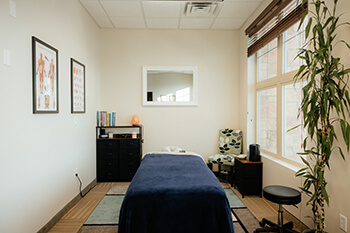
It is worth noting that the techniques involved in this kind of structural assessment overlap significantly with established physical therapy methods, and large-scale comparative trials on neurosomatic therapy specifically are limited. What distinguishes a comprehensive structural approach is the thoroughness of the intake and the scope of the assessment. At Complete Bodywork in Orem, Utah, practitioner Benjamin builds each treatment plan around a detailed history of the client’s full health timeline before any assessment begins. A shoulder injury from a decade ago, a car accident that never fully resolved, years of sitting in a position that loaded one hip more than the other, these details shape the structural picture that a standard intake form often misses. Targeted trigger point release and correction of altered postural mechanics follow the assessment, addressing the specific contributors to that individual’s sciatic pain. For people who have cycled through physical therapy or chiropractic without lasting results, this kind of whole-history, whole-body approach may identify factors that earlier treatment did not account for.
For example, a persistent lateral hip or gluteal trigger point pattern can be a primary driver of radicular-type pain even without clear imaging findings; if that is a dominant factor, resources focused on hip and sciatic pain mechanics will often produce more durable results than repeated short courses of passive modalities alone.
When to Stop Waiting and See a Doctor Immediately
Conservative management of sciatica works for roughly 80 to 90 percent of cases, with some long-term studies showing full recovery rates as high as 95 percent for disc-related sciatica. Clinical guidelines recommend a minimum of six weeks of non-surgical care before considering surgery, with twelve weeks as the standard threshold for severe, persistent cases.
Certain symptoms require immediate medical evaluation regardless of how long treatment has been ongoing. Loss of bladder or bowel control, saddle anesthesia (numbness in the groin and inner thighs), rapid or progressive leg weakness, and foot drop are red flags for cauda equina syndrome, a surgical emergency. If any of these are present, go to the emergency room. These are not symptoms to manage with stretching.
How to Choose the Best Non-Surgical Therapy for Sciatica: Where to Start
When people ask what is the best therapy for sciatica without surgery, the answer rarely comes down to a single modality. It comes down to which approach correctly identifies and addresses the structural reason your nerve is being compressed. Physical therapy, chiropractic care, and home exercises each have genuine value, and they work best when combined with, or preceded by, a thorough structural assessment. If persistent symptoms have not responded to standard care, a re-evaluation to consider alternative diagnoses, psychosocial factors, or a multidisciplinary approach is a reasonable and guideline-supported next step.
If you have been through multiple rounds of treatment without lasting relief, something in the full picture has not yet been fully evaluated. That is where to start. Complete Bodywork offers a free initial consultation to gather your full history and assess the structural imbalances contributing to your pain. If you are in the Orem, Utah area and ready to move beyond temporary symptom management, that conversation is where a real plan begins.